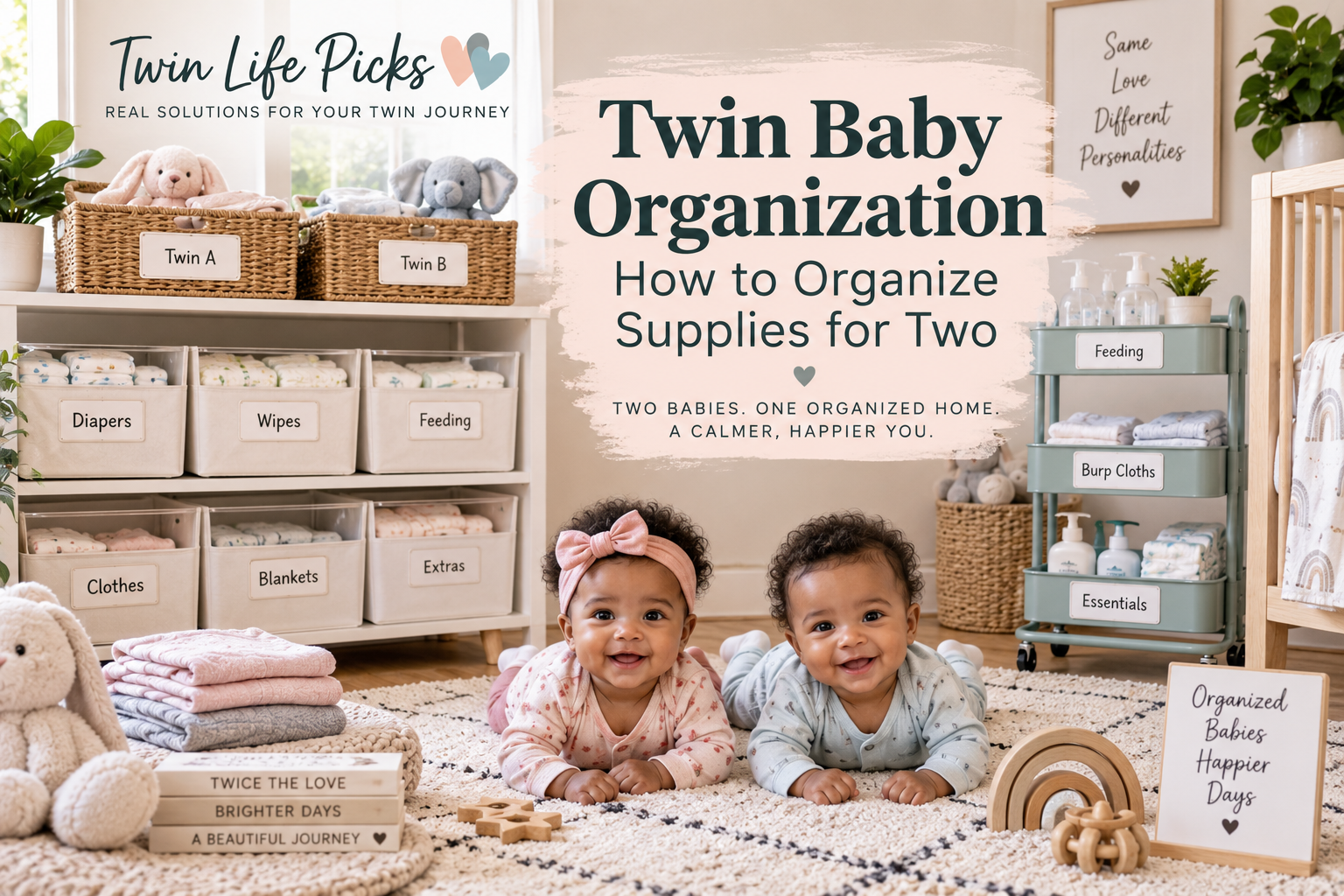
Caring for twins means having plenty of baby supplies within reach—and without a simple organization system, those supplies can quickly take over your home.
The good news is that twin baby organization doesn’t require a perfectly organized nursery or expensive storage system. A few practical storage zones and simple routines can make it much easier to find what you need when both babies need your attention.
Here are some realistic ways to organize twin baby supplies and make everyday routines more manageable.
Create Baby Stations Around Your Home
Not every diaper change, feeding, or outfit change will happen in the nursery.
Creating small baby stations in the areas where your family spends the most time can save you from constantly carrying supplies from room to room.
For example, you might keep a small basket in the living room with diapers, wipes, burp cloths, bibs, and a change of clothes for each baby.
Keep the larger supply in the nursery and refill your smaller stations as needed.
Keeping the twin baby essentials you use most often within easy reach can make feeding, diaper changes, and other everyday routines much smoother.
Set Up an Organized Twin Diaper Station
With two babies, you may go through diapers and wipes surprisingly quickly.
Keep frequently used diapering supplies together so you can reach everything easily during a change.
Your diaper station might include:
Diapers
Wipes
Diaper cream
Portable changing pad
Disposable or washable diaper bags
Extra onesies
Hand sanitizer for adults
If your twins use different diaper sizes, consider giving each baby a separate labeled basket or section.
Organize Feeding Supplies in One Area
Whether you’re breastfeeding, pumping, formula feeding, bottle feeding, or using a combination, twin feeding can involve a lot of supplies.
Choose one kitchen cabinet, drawer, cart, or counter area as your main feeding station.
You might organize bottles, nipples, burp cloths, formula supplies, breast-pump accessories, milk-storage supplies, and cleaning items there.
Keep feeding supplies together can also make it easier for another caregiver to find what they need.
Give Each Twin Their Own Space When Needed
Babies grow quickly, and having clothing in several sizes can make drawers and closets difficult to manage.
Keep the clothing your twins currently wear in the easiest-to-reach drawers or closet sections.
Store larger sizes separately and label them by size, such as:
0–3 Months
3–6 Months
6–9 Months
9–12 Months
As the babies grow, rotate the next size into their everyday drawers and move out anything they’ve outgrown.
A small bin for outgrown clothing can make this process much easier.
Use Baskets and Bins for Everyday Essentials
Open baskets and storage bins can be especially useful when you’re caring for two babies because you can quickly see and grab what you need.
Consider separate containers for:
Burp cloths and bibs
Bath supplies
Extra pacifiers
Blankets and swaddles
Health and grooming supplies
Toys and books
You don’t need dozens of containers. Start by organizing the items that create the most clutter or that you reach for most often.
Keep Frequently Used Supplies Within Easy Reach
The items you use several times every day should generally be the easiest to access.
Diapers stored on a high closet shelf may look organized, but they’re not particularly convenient when you’re holding a baby.
Think about your daily routines and place supplies where you actually use them.
Less frequently used items can go into closets, higher shelves, or longer-term storage.
Keep a Backup Supply—but Avoid Overbuying
Having twins can make it tempting to stockpile everything.
A reasonable backup supply of everyday essentials can certainly be helpful, especially for diapers, wipes, and frequently used household items.
But babies grow quickly and preferences can change. You may discover that a particular bottle, pacifier, diaper brand, or clothing size doesn’t work for one or both babies.
Organizing what you already have also makes it easier to see what you’re running low on before buying more.
Do a Quick Reset at the End of the Day
Your organization system doesn’t need to stay perfect all day.
Instead, consider doing a quick reset when you have a few minutes.
Restock diapers. Return feeding supplies to their station. Put dirty clothes in the laundry. Refill the living-room baby basket.
Even a five-minute reset can make the next morning feel more manageable.
Create Systems That Work for Your Family
The best twin baby organization system is the one your family will actually use.
Some parents love labeled containers and carefully divided drawers. Others prefer simple baskets that allow them to quickly put things away.
Both approaches can work.
Start with the areas that cause you the most frustration and organize those first. As your twins grow and their routines change, your storage systems can change with them.
Staying Organized With Two Babies
Organization won’t eliminate the busy moments that come with caring for twins, but it can reduce the amount of time you spend searching for bottles, diapers, clothes, and other everyday essentials.
Simple systems can help you spend less time managing supplies and more time focusing on your babies.
If you’re still deciding what to purchase for two babies, our twin baby registry guide can help you determine what you may need two of and what your twins can share.
Keep Both Babies’ Routines Organized
Physical organization is only part of managing life with twins. Keeping track of two babies’ feedings, sleep, diapers, pumping, medicine, activities, appointments, and milestones can be just as challenging.
The Twin Daily Planner from Twin Life Picks provides one place to keep those everyday details organized for both babies.
Helpful Twin Organization Finds
A few simple storage tools can make it easier to keep everyday twin supplies organized and within reach. Here are a few practical options that may help create a system that works for your home.
Affiliate Disclosure: This section contains affiliate links. Twin Life Picks may earn a commission from qualifying purchases at no additional cost to you.

- [Create Extra Space]]: Tired of overstuffed closets and cluttered drawers? Our drawer organizer clothes are ideal for ev…
- [Perfectly matching your drawers] : This clothes organizer set includes 15 storage bins in various sizes to fit all your…
- [Reliable material]:Our dresser organizer are crafted from tough, breathable non-woven fabric that supports a lifestyle …

- Multifunctional Use Rolling Cart: This rolling cart is 13.00″D x16.50″W x 33.80″H. Please confirm the product size befor…
- Spacious Storage Capacity: This utility cart provides 3-tier large storage space while saving you floor space to optimiz…
- Easy & Convenient to Move: This 3-Tier storage cart comes equipped with 4 wheels (2 lockable) and the handle design make…
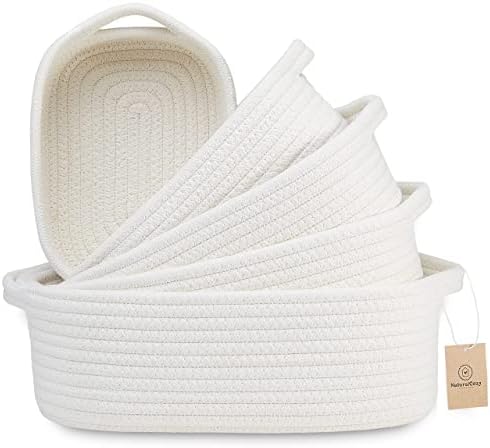
- NO MORE FLOPPY, WEIRLY SHAPED BASKETS: “My baskets came flat and now they won’t stand up straight!” If this sounds famil…
- 5 BASKETS FOR 5X THE ORGANIZING POWER: Life is messy…but your house doesn’t have to be! With 5 beautiful rope baskets …
- SOFT AND GENTLE ORGANIZER BINS: Woven baskets for organizing crafted from high-quality materials, our small bins are oh-…

- 【Total 93 Qt Capacity Multipurpose】Each storage box measures 15.35in*11in*8.27in (LxWxH). These storage boxes can be use…
- 【Stable & Long Use】 Made of high-quality PP instead of cheap inferior materials, our storage containers come with better…
- 【Easy to Install & Be Stackable】CTSNSLH storage containers for organizing can be quickly installed in minutes. You can s…